


Let’s buildthe future together.
Great ideas need great people. Partner with us to bring your vision to life, or take the first step in your career by joining our team of innovators.
A few years ago, no company could have thought of going with a fully remote work model. But, like everyone, businesses were forced to change their assumption with the working style.
Now the organizations are facing the same dilemma again, considering the current situation. Does remote work promise efficiency? Or will the in-office work model attract talent now?
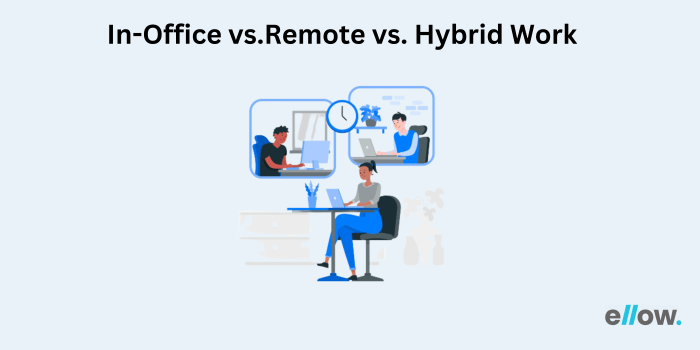
These are serious questions every business leader is asking themselves amidst the new normal.
In this article, we will explore some of the popular work models so that you can make a wise choice that balances the productivity and safety of your team.
Organizations where the employees go to the office daily to work is an in-office model. It’s a traditional setup where all the employees are expected to commute to a physical location for their job.
The employees aren’t juggling professional and personal responsibilities while in an office. The immediate attention and focus are reserved for their job. And since there are no pets or family to distract employees from work, they are likelier to get things done in less time.
An office setup provides access to all tools and technology employees might not get at home. It brings uniformity and efficiency to the tasks. And as only whitelisted tools are integrated into the work setup, the security concerns are also limited to a great extent.
The employees aren’t juggling professional and personal responsibilities while in an office. The immediate attention and focus are reserved for their job. And since there are no pets or family to distract employees from work, they are likelier to get things done in less time.
When people gather together in a company, they form a healthy bond, and the ease of communication improves. It creates a positive community of people, allowing them to grow faster.
An average employee’s eight hours in an office accompany at least two hours of commute. This daily travel steals away the employees’ personal life, affecting their work-life balance. It also increases the chances of your employees burning out.
Setting up a physical office isn’t that pocket-friendly. You need to budget for a location that can accommodate your teams, arrange the tools, manage infrastructure, and much more. Miscellaneous charges like electricity, internet, and team outings, which may appear frivolous, can also amount to a big chunk of your expenses.
Grounding yourself in a geographical border can limit the talent joining your company. When businesses are expanding their reach to attract global talent, an in-office setup can drag you down significantly.
The remote method is the one work model that got the maximum attraction in the last few days. It allows employees to work from anywhere in the world and connect virtually to collaborate. There is no need for one to come to the office.
Employees are empowered to make their own decisions with this work model. They can work from the comforts of their home or from a coffee shop in a different country. All this while maintaining their work-life balance, which keeps the employee motivated.
Remote work doesn’t require an organization to bring the employees physically together. Thus, companies save the cost of a full-fledged office, and employees don’t have to shell out money for daily commutes.
Businesses can tap into the global market to get the top talent for their team without bureaucracy. It enables a free flow of ideas and skills across the globe. It also eases access to the international market to acquire clients.
Your team is not sitting right in front of your eyes, making it difficult for you to manage remote resources. To keep the team aligned toward the common goal, you will have to introduce the proper performance metrics and tools to track it.
Also, the employees with no prior experience can feel overwhelmed with lack of direct guidance and observance.
Since all communication happens over virtual channels, employees are constantly bombarded with chats, emails, and calls. The endless meetings can often exhaust the employees leading to lower productivity. It can also impact the mental health of the employees who are always playing catch up with the flooding messages.
Hybrid work model aims to bring the best of both setups. The employees are called to office for a few days of the week and for the remaining ones they can work remotely. Now, it depends on the organization what plan they have devised to manage the workforce. The employees can either be allotted passes or a roaster can be planned to avoid office crowding.
As the employee number in office is controlled, there are less health risks to the team. And no contagious diseases will not affect the team’s availability to a serious extent.
Hybrid model allows flexibility to those employees who can’t travel to office everyday. They can work from home on most of the week days and join office for critical team meetings and tasks. It also makes it easier for you to hire remote talent.
You can manage your team effectively and fastrack any crucial project by getting the team together. Also, the employees can choose where they find themselves to be the most productive and work from either home or office.
Hybrid model doesn’t require you to hunt for a big office or other such expenses. You can rent out even a co-working space to manage lesser head count.
There are chances that people who are coming to office regularly might get quicker promotions because of their daily interactions with the managers. It can affect the management’s decision-making as few people might get more attention being physically available.
Team members who are working from home might feel isolated or left out. It can create differences and ill-feeling among the team, resulting in poor collaboration.
Now the million dollar question– which work model should you go ahead with?
To make the best decision, sit and reflect on your priorities.
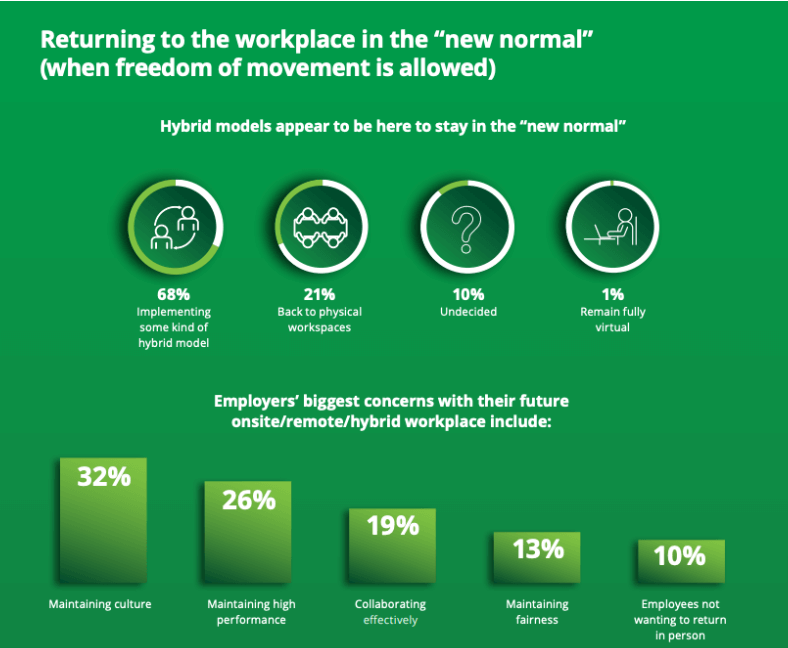
While doing all this, ask your team to weigh in with their opinion. Have an honest and inclusive discussion to understand their preferences. Try to comprehend their challenges and doubts so that you can tackle them head on. This will built confidence among your team.
Finally, the goal of your work model should be to balance productivity and employee well-being. You can’t toss in one for the other. That’s why, irrespective of the model you choose, ensure that people have a strong sense of accountability and understand their responsibilities clearly.
Great ideas need great people. Partner with us to bring your vision to life, or take the first step in your career by joining our team of innovators.

Looking to build your career in development? team@ellow.io