


Let’s build the future together.
Great ideas need great people. Partner with us to bring your vision to life, or take the first step in your career by joining our team of innovators.
Blockchain technology has been rapidly gaining popularity over the past few years and has the potential to revolutionize various industries. However, for beginners, understanding the underlying concepts and technicalities of blockchain can be overwhelming.
The global blockchain market size is expected to reach $60.7 billion by 2026, growing at a CAGR of 82.4% from 2021 to 2026.
This blog aims to provide a comprehensive guide to blockchain technology, covering the basics of what it is, how it works, and its real-world applications. From cryptocurrencies to smart contracts, this beginner’s guide to blockchain will equip you with the knowledge you need to become a blockchain wizard.
So let’s dive in and explore the fascinating world of blockchain technology!
Blockchain is a digital, decentralized ledger that is used to record transactions across many computers so that the record cannot be altered retroactively without the alteration of all subsequent blocks and the consensus of the network.
This allows for secure and transparent record-keeping and can be used for a wide range of applications, such as tracking financial transactions and voting systems.
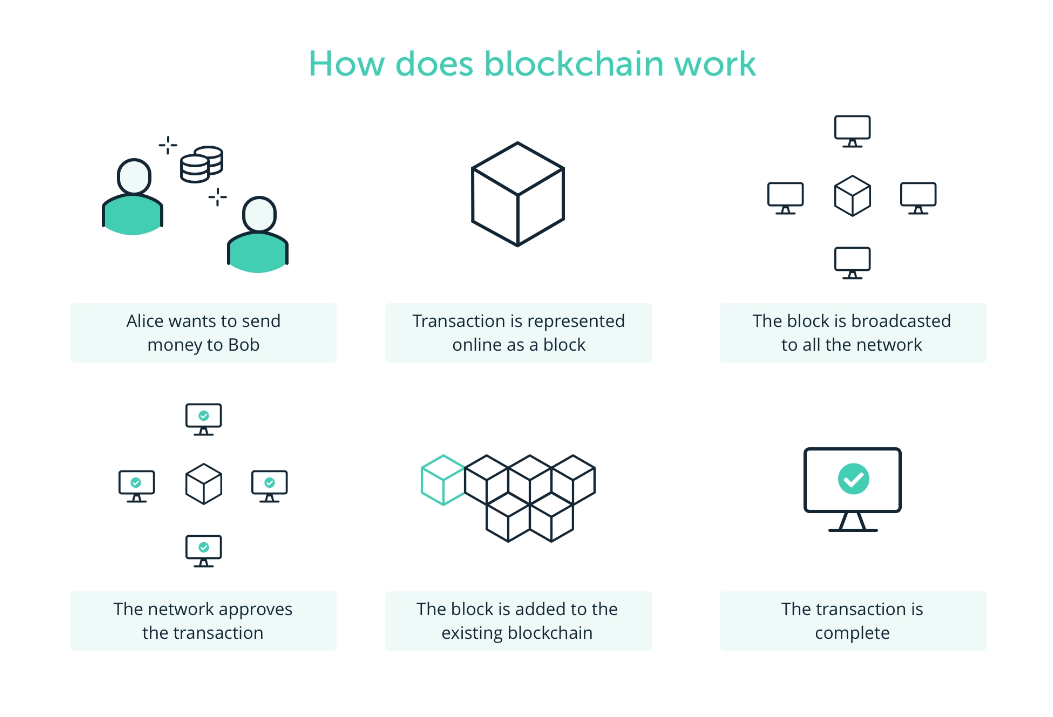
Think of it like a big, digital record book that’s used to keep track of lots of different kinds of information. This record book is special because it’s not kept in just one place–it’s shared by lots of different people and computers all around the world.
Everyone can see and verify the information that’s recorded in the book, and no one person or organization can change the information without the permission of everyone else who uses the book. This makes the information in the book very secure and trustworthy.
Also read: Top 5 Project Management Tools to Supercharge your Product Journey
Blockchain development involves the creation of decentralized applications (dApps) and smart contracts using blockchain technology.
This typically involves working with a specific blockchain platform, such as Ethereum, to create and deploy dApps and smart contracts that can facilitate a wide range of different transactions and interactions.
Blockchain developers often have a strong background in software development and a good understanding of cryptography and the underlying principles of blockchain technology.
In extremely simple terms — blockchain development is when you make new and special types of programs that use the big, digital record book (that’s called a blockchain).
These programs can help people do things like make sure that information is safe and secure, or help people make sure that everyone is following the rules when they do things online.
A blockchain developer is responsible for developing and implementing the various components of a blockchain-based system. This can include tasks, such as designing and implementing the underlying architecture of a blockchain platform, writing and deploying smart contracts, and developing decentralized applications that run on top of the platform.
Types of business problems a blockchain developer might encounter:
Core blockchain developers and dApp developers.
| Criteria | Core Blockchain Developers | dApp Developers |
|---|---|---|
| Technical skills required | Extensive blockchain knowledge | Blockchain knowledge + coding |
| Programming languages | C++, Java, Python, Go | Solidity, JavaScript, TypeScript |
| Primary focus | Building blockchain protocols | Building decentralized applications |
| Platform development | Focus on core blockchain | Focus on dApp development |
| Smart contract development | Limited involvement | Extensive involvement |
| Testing | Focus on network testing | Focus on dApp testing |
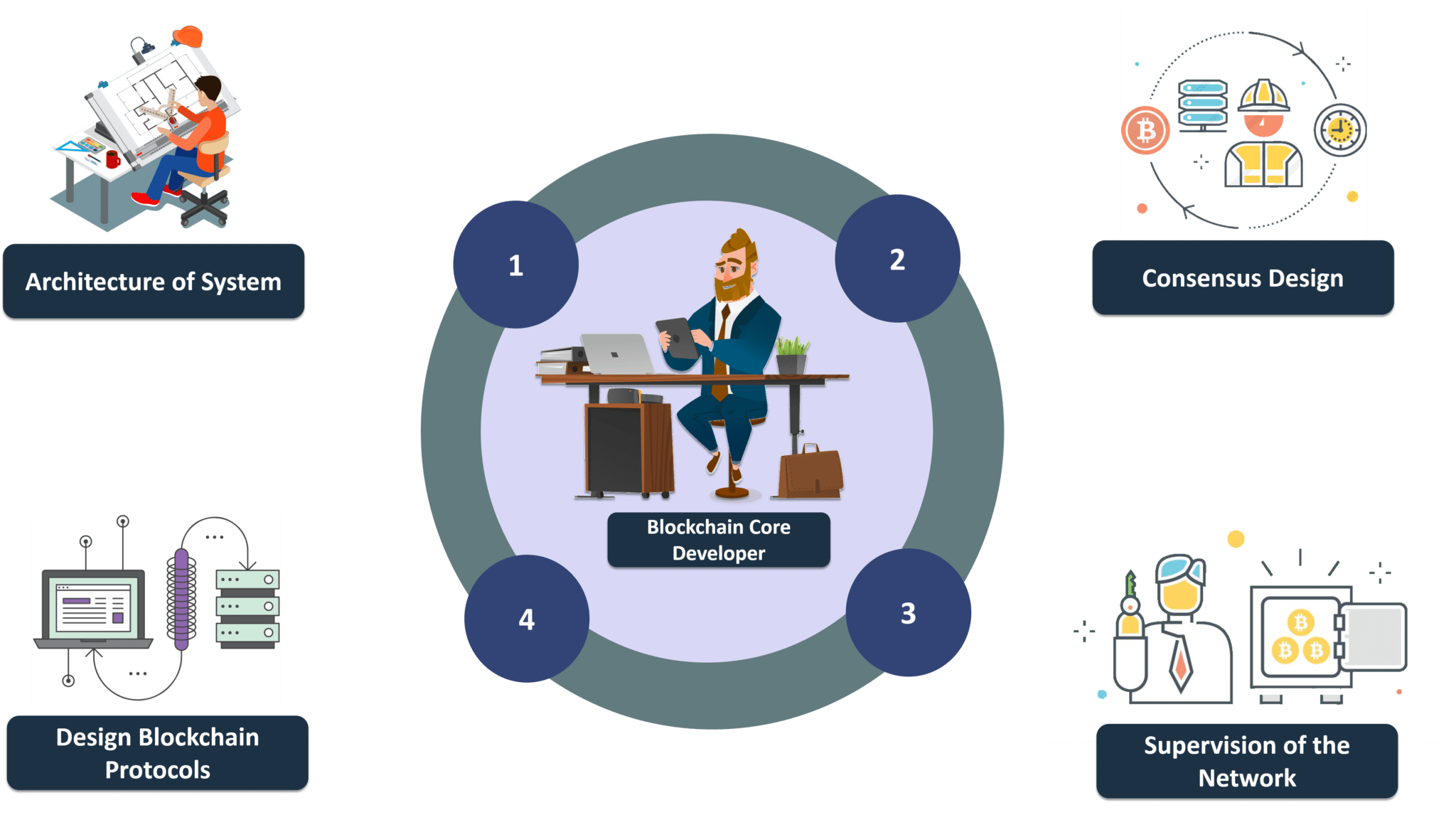
Core blockchain developers focus on developing the underlying architecture and protocols of a blockchain platform, such as the consensus mechanism and the network’s security.
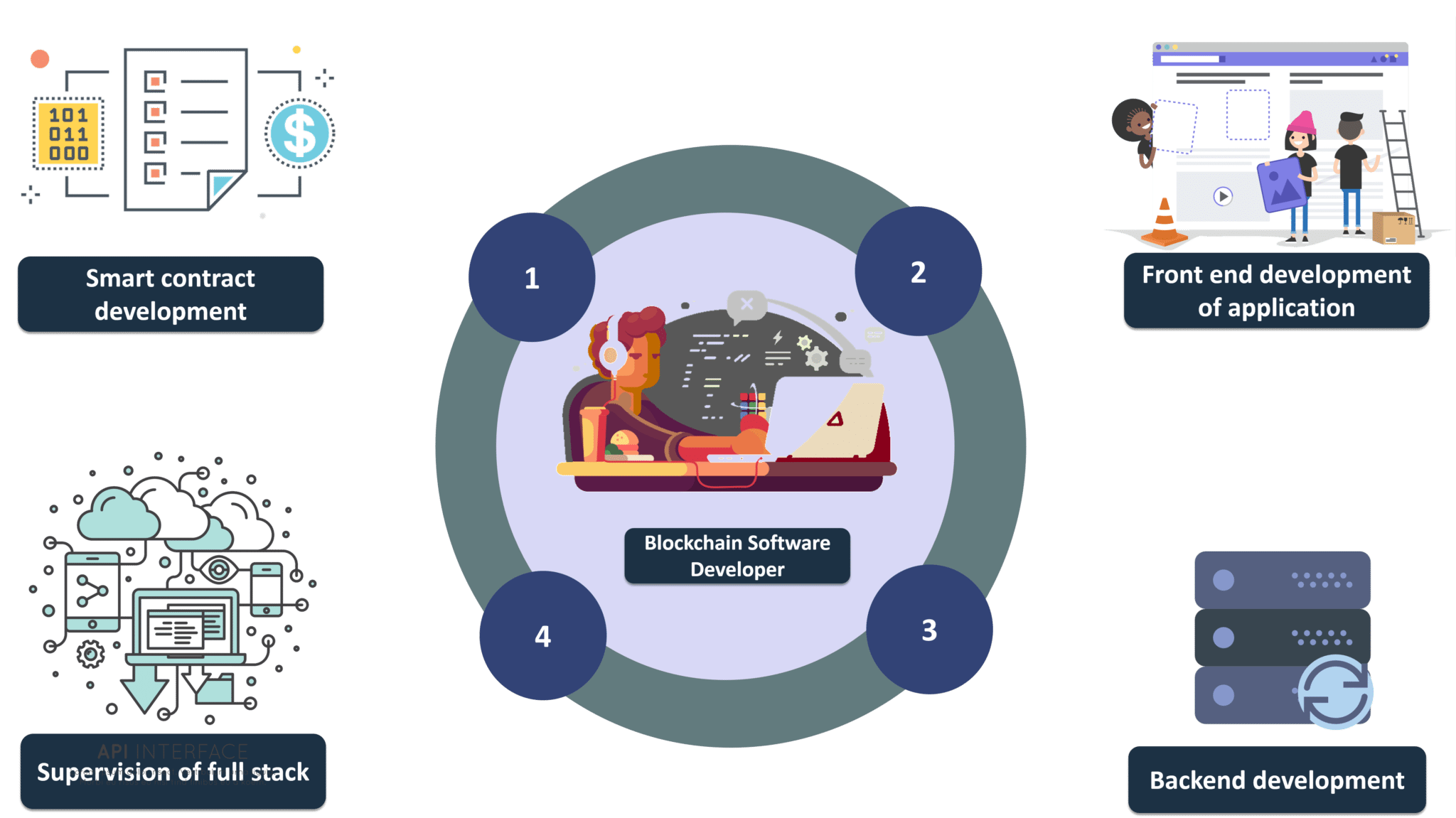
dApp developers, on the other hand, create decentralized applications that run on top of a blockchain platform. They handle front-end and back-end development, design, and maintenance.
Here is a step-by-step guide on ‘How to become a Blockchain Developer’?
This will involve learning about the key principles and concepts, such as distributed ledger technology, consensus mechanisms, and smart contracts. You can start by reading articles and online tutorials, and joining online communities. It will give you a platform to discuss blockchain with like-minded enthusiasts.
Some topics to study when learning the basics of blockchain technology include:
Also read: Why should developer take skill assessment tests?
To become a blockchain developer, you will need to learn at least one programming language that is commonly used for blockchain development.
Some popular languages for blockchain development include C++, Java, and Solidity. Other languages that are sometimes used for blockchain development include Python, JavaScript, and Go.
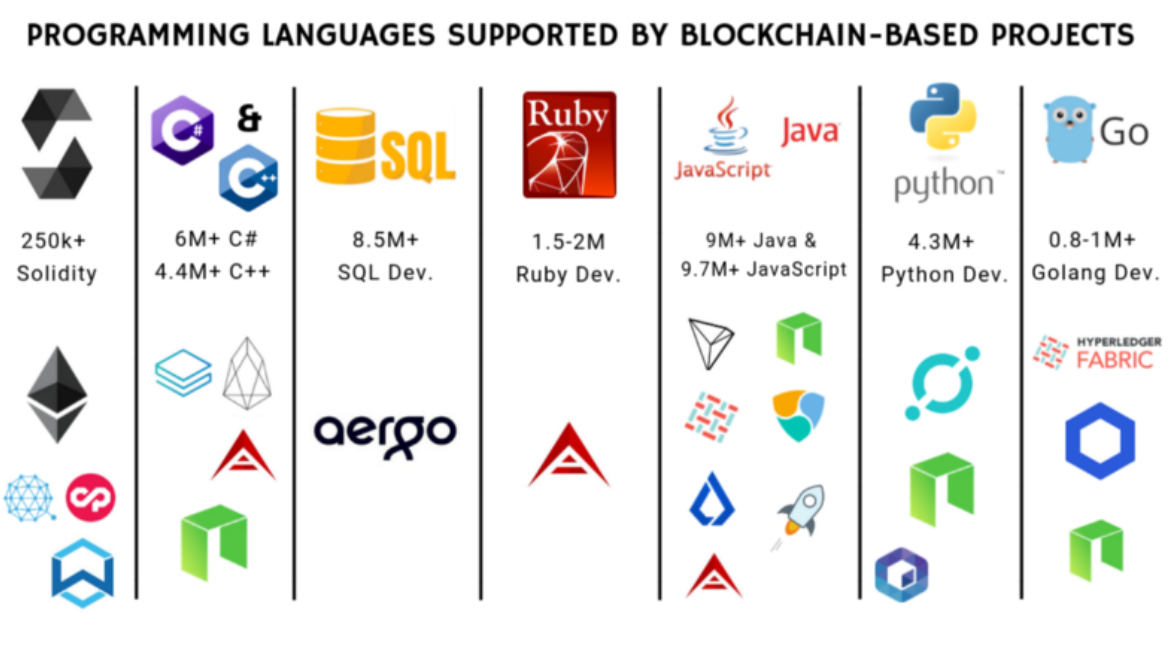
It’s important to note that the specific languages you need to learn will depend on the type of blockchain development you want to do.
For example, if you want to develop smart contracts for the Ethereum platform, you will need to learn Solidity. If you want to develop applications for the Hyperledger Fabric platform, you will need to learn Go or Java.
In general, it’s a good idea to start by learning a general-purpose programming language like C++ or Java, and then learn a blockchain-specific language like Solidity or Go once you have a solid foundation in programming. This will give you the skills and knowledge you need to start developing blockchain applications and projects.
This will involve writing code, testing your applications, and deploying them on a blockchain platform.
To get ideas, collaborate with others and get support, you can do the following:
Join online communities where you can discuss blockchain with other enthusiasts. There are many online forums, subreddits, and social media groups where you can connect with other people interested in blockchain and learn from their experiences and knowledge.
Some popular communities include the Ethereum Stack Exchange, the BitcoinTalk forum, and the Hyperledger Project. This will give you the opportunity to learn from others and apply your skills in a collaborative setting.
Also read: 15 Best Communities That Every Developer Should Join
Blockchain technology has real-world applications in various industries, including finance, supply chain management, healthcare, real estate, and more.
Blockchain technology has been widely used in the finance industry, especially for cross-border payments and remittances. It enables faster and cheaper transactions while maintaining security and transparency.
Companies like Ripple and Stellar are using blockchain to facilitate cross-border payments.
Blockchain technology is used to track the movement of goods across the supply chain, from the manufacturer to the end consumer. It ensures transparency and helps in identifying inefficiencies in the supply chain.
Walmart, for instance, is using blockchain to track the origin and movement of produce.
Blockchain technology can be used to secure and manage electronic health records (EHRs). EHRs contain sensitive personal information and need to be secure and tamper-proof.
Blockchain can ensure secure and transparent sharing of EHRs between healthcare providers, patients, and insurers.
Blockchain technology is being used to streamline the process of buying and selling real estate properties. It enables secure and transparent transactions, eliminates intermediaries, and reduces the time and cost involved in real estate transactions.
Companies like Propy are using blockchain to facilitate cross-border real estate transactions.
Blockchain technology can be used to conduct secure and transparent voting systems. It can ensure that votes are cast and counted accurately while maintaining the privacy of the voter.
West Virginia used blockchain to enable overseas military personnel to vote in the 2018 mid-term elections.
Blockchain technology is being used to create decentralized gaming platforms, where gamers can own and trade in-game assets. Blockchain enables transparent and secure transactions of gaming assets, making it easier for gamers to monetize their skills.
Companies like Enjin are using blockchain to create decentralized gaming ecosystems.
Easiest way to find a job as a blockchain developer is to hang out where people are hiring, and where recruiters and tech leaders go for hiring blockchain developers. And that place is Ellow — a global talent marketplace that connects you with companies around the globe, that needs talent like you. Get compensated fairly and hired easily without lengthy interview processes.
Blockchain development is generally not part of the regular course curriculum at a university or college. But one can learn blockchain development through online training & communities, seminars, etc. Many online training academies such as Udemy, Udacity, Coursera, edX, etc. offer short-term courses and nano-degrees on blockchain development.
The most common coding languages used by blockchain developers are Python, C++, and Java.
Deloitte, Capgemini, CISCO, IBM, KPMG, EY, Accenture, etc. are some global organizations that hire blockchain developers.
In the United States, the national average salary for a blockchain developer is $1,10,000. In India, the salary of a blockchain developer is between ₹ 2.1 to 20.0 lakhs, with an average salary of at least 7 lakhs.
A dApp (decentralized application) is a software application that runs on a decentralized network such as a blockchain. Unlike traditional applications, dApps have no central authority and are transparent and secure.
Smart contracts are self-executing programs that automatically enforce the terms of a contract between parties. Smart contract development involves creating these programs using programming languages such as Solidity, which is specifically designed for Ethereum blockchain.

Great ideas need great people. Partner with us to bring your vision to life, or take the first step in your career by joining our team of innovators.

Looking to build your career in development? team@ellow.io