Let’s buildthe future together.
Great ideas need great people. Partner with us to bring your vision to life, or take the first step in your career by joining our team of innovators.



Receive new articles delivered Straight to your inbox
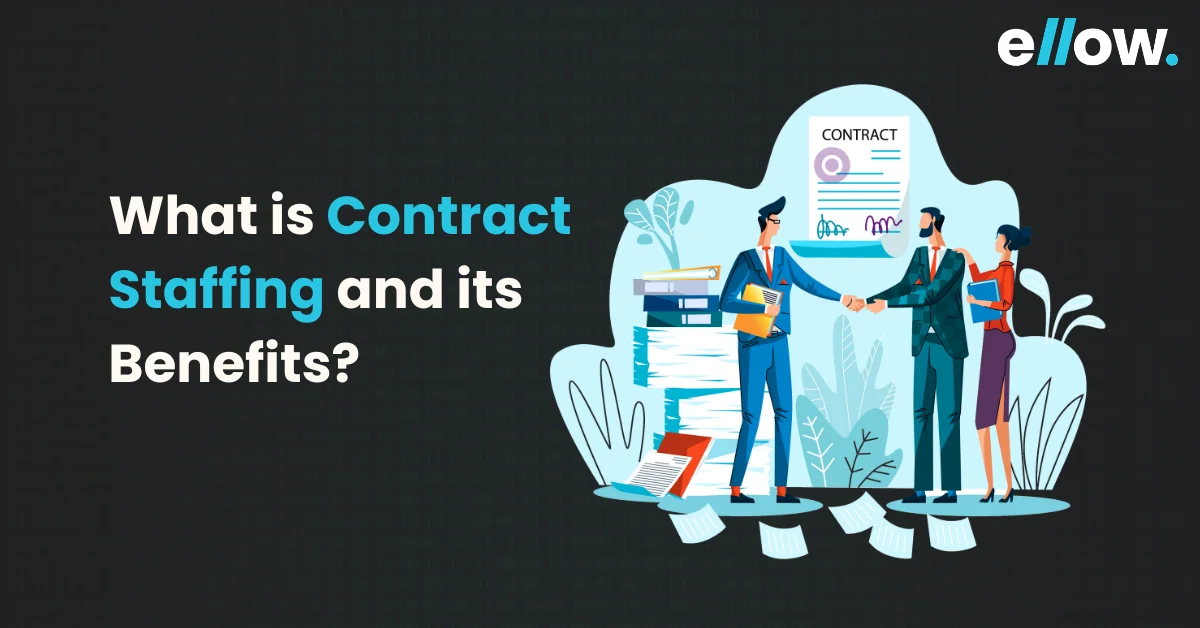
The pandemic has significantly transformed traditional business operations, compelling companies to seek more adaptable approaches for meeting their staffing requirements.
In this evolving landscape, contract staffing—also known as temporary staffing—has emerged as a formidable strategy. This approach involves recruiting employees for a predetermined period, specifically to achieve targeted business objectives.
The global contract or temporary staffing market is expected to grow to an astonishing $1.20 billion by 2030, highlighting the model’s growing popularity.
In this discussion, we delve into the nuances of contract staffing, how it works, its benefits, and its rising prominence as a key player in the dynamic job market.
Contract staffing is a flexible hiring process where companies hire employees on a temporary basis, often used for project-based work, seasonal demands, or to fill in for staff on leave.
This approach is particularly popular in the tech industry due to the project-oriented nature of the work and the need for rapidly evolving skill sets.
Unlike permanent staff, contract employees do not receive benefits like health insurance or paid leave. However, they often receive higher hourly wages to offset this difference. Contract staffing is common in companies that have fluctuating workloads or short-term projects.
This allows companies to adjust their workforce according to demand. Employers profit from having access to specific expertise when needed, and people gain from working on a variety of tasks and possibly earning more money.
Contract staffing involves a company partnering with a staffing agency to fill employment gaps with temporary workers. This arrangement allows the staffing agency to handle the complexities of recruitment, including managing all associated paperwork, legal requirements, payroll, and taxes on behalf of the company.
In this model, the company compensates the staffing agency for the services of each contracted worker. The agency, in turn, is responsible for the payment of wages and benefits to these workers.
Essentially, it provides businesses the flexibility of augmenting their workforce as needed, without the obligations that come with direct hires.
Here’s an example of Contract staffing in tech recruitment:
This example shows how contract staffing offers tech companies the agility to scale their workforce according to project needs without committing to long-term employment.
Employees under a part-time contract engage in work for a predetermined number of hours each week or month. They are compensated with a pre-agreed payment for their services, making this arrangement suitable for both parties seeking flexibility.
This type of contract is utilized to hire individuals for a specific project or for a set duration. The employment relationship terminates once the project concludes or the term comes to an end, eliminating any obligation for future employment by the company.
Companies often outsource their staffing requirements to an agency, which then provides suitable candidates to fill these roles. The company compensates the agency for the services rendered by the contracted staff, streamlining the recruitment process.
Zero-hour contracts offer no guaranteed hours of work by the employer.
Instead, employees are called upon as needed, often to address urgent tasks or to meet unforeseen demands. Compensation is based on the actual hours worked, offering a high degree of flexibility.
Ideal for projects that require specialized skills on a temporary basis, freelance contracts allow independent professionals to offer their services directly to clients. The terms of engagement, such as hourly rates or project-based fees, are negotiated between the freelancer and the client, offering a tailored approach to contract staffing.
Contract staffing allows employers to adjust their workforce according to fluctuating business demands. They can easily scale up or down without the commitment of permanent hires, helping them manage budgets efficiently and adapt swiftly to market changes.
Contract staffing proves to be a cost-effective solution, particularly for short-term projects or roles. Companies save money by not hiring permanent staff. It saves on a lot of expenses like office space or equipment as well as benefits.
With contract staffing, employers mitigate the risk of hiring the wrong person for a permanent position. They can evaluate an applicant’s performance before offering a job. It also reduces the possibility of expensive hiring mistakes.
Employers gain access to specialized skills and expertise without needing permanent hires. This helps businesses achieve project requirements effectively, especially for initiatives that call for specialized technical or industrial knowledge.
Contract staffing enhances productivity by providing employers with additional staff during peak periods or for specialized tasks. Permanent employees are kept from becoming overworked. Employers may guarantee high-quality results and timely project completion by utilizing a contract workforce.
Challenges of contract staffing are important to understand, despite its benefits. These challenges include:
While both contract staffing and permanent staffing have their advantages, there are some key differences to consider.
Contract Staffing offers greater flexibility and cost savings, but may not provide the same level of job security or benefits as permanent employment.
Permanent Staffing, on the other hand, offers greater stability and benefits, but may not be as flexible or cost-effective as contract staffing.
Here’s a comparison between permanent staffing and contract staffing:
| ATTRIBUTES | PERMANENT STAFFING | CONTRACT STAFFING |
| Length of Employment | Long-term, typically indefinite | Short-term, fixed duration or project-based |
| Employee Benefits | Generally receive full benefits (healthcare, retirement, etc.) | May receive limited or no benefits from an employer |
| Employer Costs | Higher costs due to benefits and long-term commitment | Lower costs due to limited duration and benefits |
| Hiring Process | Often involves a rigorous and lengthy hiring process | Can be a quicker and simpler process |
| Job Security | Generally more job security and stability | Generally less job security and stability |
| Skill Set Required | Usually requires specialized skills and experience | May require specialized skills but often more flexible |
| Management | Generally managed by the employer or an assigned supervisor | Generally self-managed with minimal oversight |
Consider these factors carefully when deciding between contract and permanent staffing options. Each has its advantages and considerations based on your organization’s needs and priorities.
Contractual staffing is beneficial in various scenarios, but it is essential to understand when it is the right choice:
Choosing the right contract staffing agency is crucial for your business. Here’s a simple guide to help you make the best choice:
ellow.io offers extensive staffing experiences, providing tailored solutions, swift hiring, cost-effectiveness, industry expertise, and reliable replacements for seamless operations.
Contract staffing models have become increasingly popular across a broad range of industries, offering companies a flexible and efficient approach to meeting their workforce needs. If your organization is exploring the benefits of adopting this recruitment strategy, there’s no better time than now to partner with a distinguished staffing agency.
Consider partnering with a specialized service provider like ellow.io, we are known for our expertise in contractual staffing solutions.
Starting with a pilot project is an excellent way to assess the fit and efficiency of the partnership. Such an approach paves the way for a fruitful, long-term collaboration that promises to bring significant value to your business.
Recommended Reads:
Freelance vs. Contract Work: Who to hire for your next project?
Contract Work vs. Full-Time Employment: What’s the Difference?
Why Ellow Is The Best Platform To Hire Freelance Developers?
Contract staffing, also known as temporary staffing, involves hiring employees for a specific duration or project rather than permanently. These workers are typically employed through a staffing agency and are contracted to work for a predetermined period.
Contract staffing offers businesses flexibility in managing their workforce, allowing them to scale up or down as needed without the long-term commitment of permanent hires. It also provides access to specialized skills for short-term projects, reduces administrative burdens, and helps control costs associated with recruitment and benefits.
Contract staffing provides employees with opportunities for diverse work experiences, exposure to different industries, and the flexibility to choose assignments that align with their skills and career goals. It can also lead to potential full-time employment opportunities and offers a degree of work-life balance due to the temporary nature of assignments.
Contract staffing is prevalent in industries with fluctuating workloads or project-based needs, such as IT, engineering, healthcare, finance, and manufacturing. However, it is increasingly being adopted across various sectors seeking workforce flexibility and specialized expertise.
Businesses should carefully assess their short-term and long-term workforce needs, define clear job requirements, and establish effective communication channels with their staffing agency partners. Additionally, they should prioritize compliance with labor laws and regulations to mitigate risks associated with contract staffing arrangements.
How AI Reduces Time-to-Hire Without Compromising Quality

Top 5 Benefits of Working with an AI-Native Recruitment Agency as Business Owner

The Future of Hiring: AI Meets Human Expertise
Please feel free to share your thoughts and we can discuss it over a cup of tea.
Get a quote
Top 5 Benefits of Working with an AI-Native Recruitment Agency as Business Owner

Six Things to Consider When Hiring Remote Talent
ellow.io enters remote hires market with AI-based screening process
