Let’s buildthe future together.
Great ideas need great people. Partner with us to bring your vision to life, or take the first step in your career by joining our team of innovators.



Receive new articles delivered Straight to your inbox
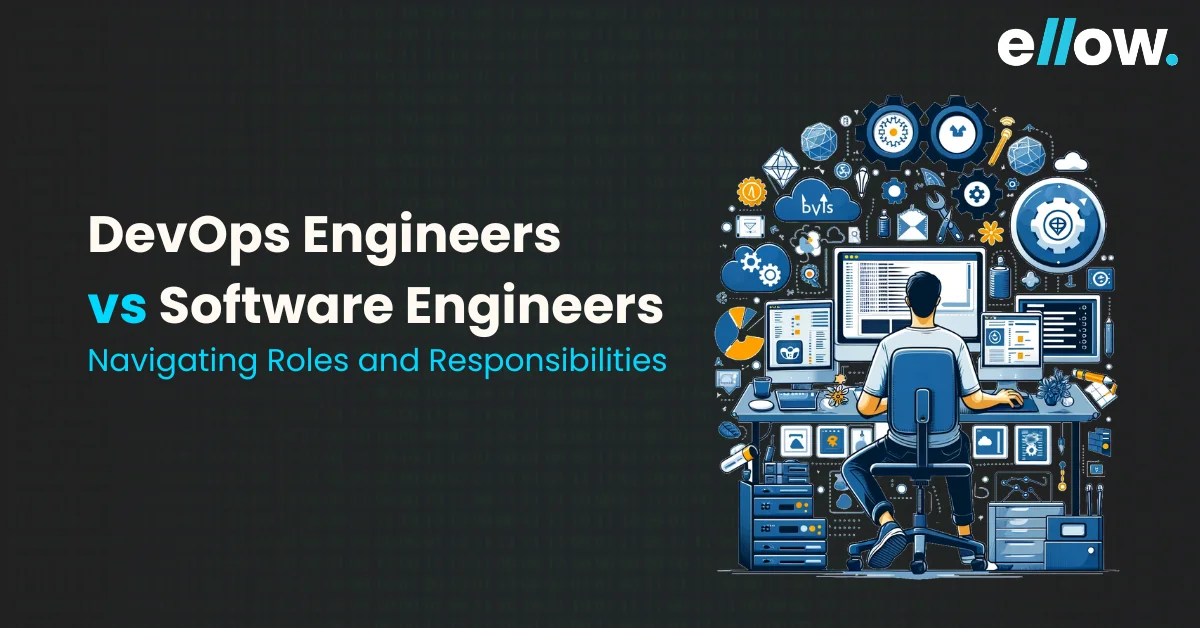
In software development, understanding the differences between various roles is very important. With the worldwide developer population steadily growing according to statistics from Statista, it is evident that the tech industry is booming.
Amidst this growth, confusion often arises regarding DevOps and software engineers’ roles, how much overlap exists between the roles?
DevOps and software engineers play integral parts in the software development lifecycle, as highlighted by insights from CloudZero’s DevOps statistics.
While their responsibilities may intersect, they possess distinct focuses and skill sets. With their broader scope, DevOps engineers encompass tasks beyond development, such as deployment and release management.
To optimize efficiency and meet customer demands, companies transitioning to DevOps culture must grasp the nuances between these roles.
Collaboration between DevOps engineers and software engineers is essential for streamlining development processes and ensuring timely releases.
This article delves deeper into the comparison between software developers and DevOps engineers, elucidating their unique contributions to the software development landscape.
A DevOps engineer is a crucial player in software development, bridging the gap between development and operations. Their primary role involves combining coding, testing, and operational support to ensure efficient software deployment.
DevOps engineers wear two hats: they write code, test it, and also manage the deployment process, fixing any issues that arise along the way. This cohesive approach ensures that new software functions smoothly across different systems and platforms, meets user needs, and gets to market faster.
Working closely with management and other teams, DevOps engineers contribute to the design, development, testing, maintenance, and evaluation of software. Effective communication and collaboration are essential skills, alongside top-notch coding abilities, to ensure seamless integration and functionality.
Additionally, DevOps engineers need expertise in deploying applications on cloud platforms like Amazon AWS, Google Cloud, or Microsoft Azure. They should also be adept with automation testing tools such as Selenium, and know integration tools like Jenkins, as well as automated delivery tools like Puppet, Chef, and Ansible.
A software engineer is a skilled professional in the field of information technology who plays an important role in the creation, maintenance, and enhancement of software and applications. Their primary responsibilities revolve around designing, developing, testing, and maintaining software products throughout their lifecycle.
These engineers possess proficiency in various programming languages and adhere to coding standards while leveraging their engineering skills to build and troubleshoot software solutions. They are adept at analyzing client requirements and translating them into functional software applications.
There are diverse specializations within the world of software engineering, with individuals focusing on different aspects such as gaming applications, user interfaces, server infrastructure, and middleware systems.
Software engineers are typically divided into two main categories: application engineers and system engineers. Application engineers focus on understanding client needs and developing software solutions to meet those requirements, while system engineers are responsible for the maintenance and growth of computer systems within an organization, ensuring seamless IT services.
Check this video out: Software or DevOps Engineer?
When it comes to DevOps versus Software Engineers, it’s akin to comparing two critical functions within a team, from a CEO to a department head. Each has distinct responsibilities and skill sets, but they operate at different levels. Let us look into a comprehensive comparison between these roles to grasp their differences.
DevOps engineers primarily focus on automating software development workflows and optimizing the Software Development Life Cycle (SDLC). They ensure smooth deployment and operation of software applications, often leveraging a plethora of DevOps tools and technologies.
On the flip side, software engineers are responsible for designing, developing, and testing software applications. Their core duties revolve around coding and implementing algorithms.
DevOps engineers have a broader scope as they are involved in the entire software development lifecycle, from development to production and beyond. They optimize infrastructure, monitor software for issues, and facilitate continuous deployment, ensuring swift release of software into production environments.
In contrast, software developers primarily concentrate on the development phase. Once the software is deployed, their role typically concludes, and operations teams take over.
DevOps and software engineers possess distinct skill sets enabling them to perform specific tasks within their domains. DevOps engineers require proficiency in coding, system administration, IT infrastructure, and networking. They often work with scripting languages like BASH and Python, alongside containerization and CI/CD tools such as Kubernetes, Docker, Jenkins, Ansible, and Chef.
Software developers, on the other hand, need strong expertise in programming languages, coding practices, algorithms, and data structures. Additionally, they must possess software skills like problem-solving, teamwork, and attention to detail.
Software developers typically follow an agile approach, where they create, test, and iterate code until desired results are achieved. Their focus lies in crafting quality code to build scalable and maintainable applications.
DevOps engineers, however, concentrate on infrastructure optimization, process automation, and ensuring seamless software operation. They adopt a continuous delivery approach, facilitating rapid software releases with minimal risks.
Here is a quick look at the comparison:
| Factor | DevOps Engineers | Software Engineers |
| Technical Skills | Scripting and programming languages, CI/CD tools, version control, containerization systems, etc. | Languages and frameworks like Java, Python, JavaScript, Angular, and React. |
| Soft Skills | Communication, collaboration, security, proactiveness. | Problem-solving, teamwork, communication, and project management. |
| Scope of Work | DevOps engineers work with the development and deployment teams. | Software engineers focus on the development environment. |
| Categories | DevOps Evangelist, Release Manager, Software Developer/Tester, Security Engineer, and Automation Expert. | System Engineer, Application Engineer, System Architect, Project Engineer. |
While both DevOps engineers and software engineers contribute to the software development process, their roles, responsibilities, and skill sets differ significantly. Understanding these disparities is crucial for fostering effective collaboration within development teams.
Both software engineering and DevOps engineering play critical roles in the IT industry, albeit with distinct focuses and responsibilities. Software engineers primarily concentrate on designing, developing, and testing software programs tailored to client needs.
On the other hand, DevOps engineers bridge the gap between development and operations, prioritizing code releases and operational efficiency, while also overseeing the software engineering team.
While it is acknowledged that DevOps engineering presents additional challenges and demands a broader range of soft skills and technical expertise compared to traditional software engineering roles, both fields contribute significantly to the development and deployment of software solutions.
In today’s competitive hiring landscape, the demand for skilled developers, including both software and DevOps engineers, continues to rise.
For businesses seeking to efficiently fill vacancies in these roles, platforms like ellow.io offer valuable assistance by connecting them with senior talents who match their requirements in terms of expertise, work culture, and logistical considerations.
Top 10 Programming and Scripting Languages for DevOps Engineers
Top Benefits & Advantages of DevOps
Top Skills To Look for In A DevOps Engineer
Latest technologies in the software industry
13 Types of Software Development
DevOps engineers focus on the integration of development and operations, emphasizing collaboration and automation to streamline the software delivery process. Software engineers primarily concentrate on designing, developing, and testing software programs according to client requirements.
DevOps engineers require a diverse skill set, including proficiency in coding, automation tools, system administration, and collaboration techniques. Additionally, strong communication and problem-solving abilities are crucial for effective teamwork and troubleshooting.
DevOps engineering enhances software development by promoting continuous integration and delivery (CI/CD), ensuring rapid and reliable code deployment. By fostering collaboration between development and operations teams, DevOps practices improve efficiency, scalability, and the overall quality of software products.
Yes, software engineers can transition to DevOps roles by acquiring additional skills in areas such as system administration, cloud computing, containerization, and automation tools. Many organizations value the versatility of individuals with both software development and DevOps expertise.
Platforms like ellow.io offer comprehensive resources, courses, and guidance for individuals interested in both software engineering and DevOps. Additionally, online communities, forums, and professional networks provide valuable insights, tutorials, and networking opportunities for aspiring and experienced professionals alike.

Can AI Recruitment Really Reduce Bias in Hiring? Here's What to Know

Inside an AI-Native Staffing Team: How the Hiring Process Actually Works, Step by Step

AI Recruitment Agency Pricing: What Should You Actually Expect to Pay?
Please feel free to share your thoughts and we can discuss it over a cup of tea.
Get a quote
Software Development Outsourcing Challenges and how to solve them
Best database for web development: A developers guide
Inside an AI-Native Staffing Team: How the Hiring Process Actually Works, Step by Step
