



Let’s buildthe future together.
Great ideas need great people. Partner with us to bring your vision to life, or take the first step in your career by joining our team of innovators.
Full stack development is one of the high-demand jobs in the technology industry, featuring plenty of career growth and opportunities. Most organizations prefer to hire a full stack developer instead of hiring multiple resources. In simple terms, full-stack development is the culmination of front-end and back-end development of an application.
If you aspire to start your career as a full stack developer but are unsure where to start, we’ll break things down for you. In this article, we’ll not only discuss how to become a full stack developer but also explain what it is, the roles and responsibilities involved, the technical and soft skills needed.
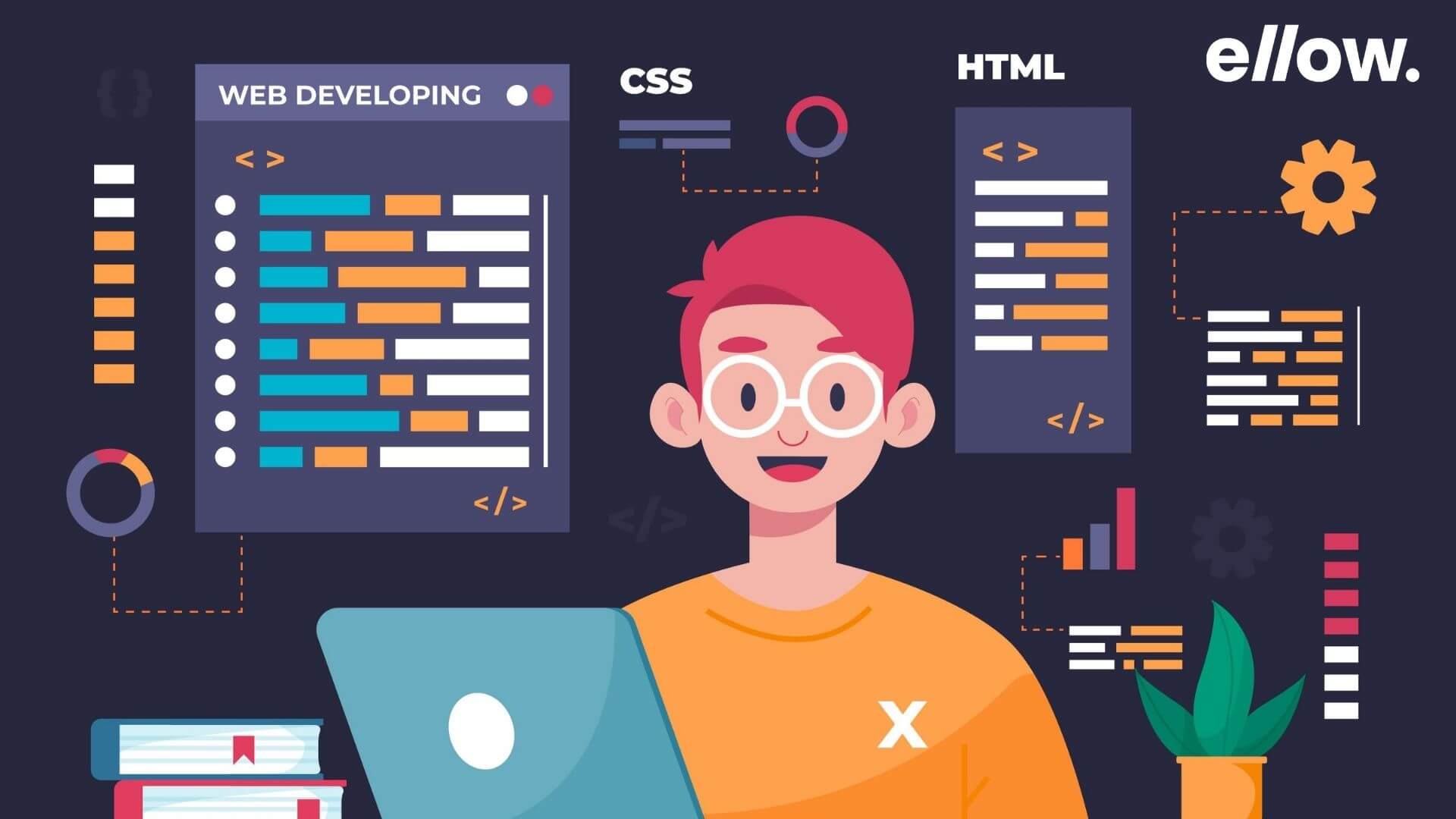
A full stack developer is a technical person who develops full-fledged applications. They have the potential to work on both the front-end and backend of the software application. These developers also deeply understand the technologies used to implement different components and layers in a software application.
Also read: 7 Books Every Software Developer Must Read Right Now
A full stack developer deals with the creation of an application from its start to finish. He designs the front-end and the backend of an application, which are the two distinct classifications of web development.
| Client Software (Front-End) | Server Software (Back-End) |
|---|---|
| User interface for interacting with the system | Receives requests from the client and responds with data |
| Runs on the user’s device (e.g. web browser, mobile app) | Runs on a remote server or cloud platform |
| Responsible for rendering and displaying data | Responsible for processing and storing data |
| Typically written in languages like JavaScript, HTML, and CSS | Typically written in languages like Java, Python, Ruby, or C# |
| Handles user input and interactions | Manages database access and server-side processing |
| Requires an internet connection to communicate with the server | Can be accessed by multiple clients simultaneously |
| Limited access to system resources | Has full access to system resources and can perform complex operations |
| Examples include web browsers, mobile apps, and desktop applications | Examples include web servers, application servers, and database servers |
The front-end of an application, also known as client software, is what the user sees and interacts with. Front-end development, in general, covers user-facing elements like graphical elements, design, and user interface.
HTML, CSS, JavaScript, Bootstrap, and various other frameworks and libraries are used in front-end development. A Full-stack developer should know how the software application should look and what the flow of an app should be.
The backend of an application, also known as server software, is the area of the website that is hidden from the users’ view. The back-end interacts with the front end to receive and send information to the web app.
A server, an application, and a database are the three main components that constitute the backend. A full-stack developer must have expertise in backend technologies which involves organizing and storing data and ensuring that everything runs robustly on the client side.
Full-stack developers design and create end-to-end websites and applications. The role comprises overseeing a project from conception to culmination.
Here are some of the key roles and responsibilities:
Also read: Level Up Your Skills: Top 5 Java Certifications For Developers
Full stack developers are often called jack-of-all-trades and need to learn a few skills to become full-stack professionals. Some basic skills include acquiring knowledge of programming languages, knowing how to structure design, implementing stacks, and testing projects, depending on consumer requirements. Each skill they learn in the technology industry builds on the last.
Read further to learn about learning resources, necessary programming languages, creating a portfolio, building a resume, and preparing for an interview.
There are multiple learning resources; you can choose how you want to learn full-stack development.
There are many online resources available to learn Full Stack Development, including online courses like Udemy, Coursera, and Codecademy, as well as developer communities like Stack Overflow and GitHub.
A full stack developer’s success is dictated by his willingness to learn new and emerging programming languages. The more programming languages you know, the more valuable you are to a potential employer.
Front-end programming languages: Front-end development dictates what the user sees, hears, and does. A full stack developer must have comprehensive knowledge of the programming languages to ensure the functionality of an application’s visual aspects. A full-stack developer is expected to understand the following front-end programming languages and frameworks:
Backend programming languages: A full stack developer must possess the knowledge of the primary backend programming technologies to ensure the websites remain functional. A full-stack developer is expected to understand the following backend technologies and frameworks:
Your portfolio is your first impression. The goal of a successful portfolio is to showcase your skills. Portray your skills briefly about the technologies used and your role in the previous projects, and add screenshots of your project. Revisit it regularly to ensure it always highlights you at your best.
These are just a few examples of projects that you can include in your portfolio. Be sure to choose projects that showcase your strengths and interests as a full-stack developer.
When you apply for a job, the recruiter will first ask for your resume. An excellent resume will fill in all the gaps left over from your portfolio. Remember to elaborate on your professional history, education, and technical skillset on your resume. A well-edited and well-organised resume can reveal a lot about your personality.
Nailing a job interview takes more preparation and practice. Research well about the company, prepare questions, and rehearse answers to the most common full-stack developer interview questions. Also, knowing about the job role and what the company expects from you might present you in a favourable light.
Check out this great resource! It’s full of valuable interview questions that can help you hone your skills and prepare for the big day.
While having a degree in computer science or a related field can be helpful, it is not always necessary to become a Full Stack Developer. Many successful developers have learned through self-study and practical experience.
The answer to the above question depends on a person’s ability to comprehend information, their chosen training methods, and their commitment level.
There is no set timeline to become a full stack developer as it depends on various factors such as your prior experience, education, learning speed, and the resources available to you.
Becoming an expert in full-stack development can be a lifelong pursuit, but for some people, it might take anywhere from six months to two years, and their ability to learn new technologies.
Employers expect full stack developers to be skilled in a few key areas and take on multiple roles. Along with proficiency in programming languages, full stack developers also need a basic understanding of web design, web architecture, and database management. Hence, it would be best if you started by mastering the following 10 essential skills:
Here are some of the soft skills you’ll want to develop, along with technical skills, if you’re on the path to becoming a full-stack developer.
Are you a full stack developer looing for a remote full time or freelancing job? Don’t worry, we have got your back, contact us at sales@ellow.io to know more
Full-stack developers are in high demand in today’s job market due to their ability to handle both front-end and back-end development tasks.
In this section, we will discuss the job opportunities for full-stack developers, the skills employers look for in full-stack developers, and the salary expectations for full-stack developers.
The job market for full-stack developers is growing rapidly, with more and more companies seeking candidates who can work on multiple aspects of a project. This is especially true for startups and small businesses where full-stack developers are highly valued due to their versatility and ability to work with limited resources.
In addition, many established companies are also seeking full-stack developers to streamline their development processes and reduce the need for multiple developers.
Employers typically seek full-stack developers who possess a broad range of skills and experience in both front-end and back-end development.
Some of the key skills employers look for in full-stack developers include proficiency in programming languages such as JavaScript, Python, Ruby, and PHP, as well as experience with databases, server-side frameworks, front-end frameworks, and version control systems.
Employers also look for candidates who have experience working in an agile development environment and possess excellent problem-solving skills.
Salaries for full-stack developers can vary depending on factors such as experience, location, and company size.
According to Glassdoor, the average salary for a full-stack developer in the United States is around $100,000 per year, with entry-level salaries starting at around $70,000 per year and experienced developers earning upwards of $130,000 per year.

In addition, full-stack developers who possess additional skills such as mobile development, cloud computing, or DevOps can earn even higher salaries.
In conclusion, becoming a full stack developer can be a lucrative career choice with numerous opportunities for growth and learning. A full stack developer is responsible for designing and developing end-to-end websites and applications, working on both the front-end and back-end of software applications.
To become a full stack developer, one needs to acquire knowledge of programming languages, web design, web architecture, database management, and soft skills such as communication, adaptiveness, problem-solving, and leadership.
While a degree in computer science or a related field can be helpful, it is not always necessary, and there are various resources available to learn full-stack development.
In full stack development, a developer needs to learn HTML, CSS, JavaScript, React JS, and jQuery for the front-end and Python, Java, PHP, SQL, and Ruby for the back-end
With prior skill and experience in software development, a degree in computer engineering is not a necessity.
Yes, you can. With talent-marketplace like ellow, you can work for global organizations directly from your home.
While it’s not necessary to learn multiple programming languages to become a Full Stack Developer, having knowledge of more than one programming language can be an advantage. Different programming languages are suited for different tasks, and being able to choose the right language for a particular task can make you a more valuable developer.
Yes, it’s possible to specialize in a particular area of Full Stack Development, such as front-end development, back-end development, or database development. However, having a broad understanding of all aspects of web development can make you a more versatile developer and increase your job prospects.


Great ideas need great people. Partner with us to bring your vision to life, or take the first step in your career by joining our team of innovators.

Looking to build your career in development? team@ellow.io