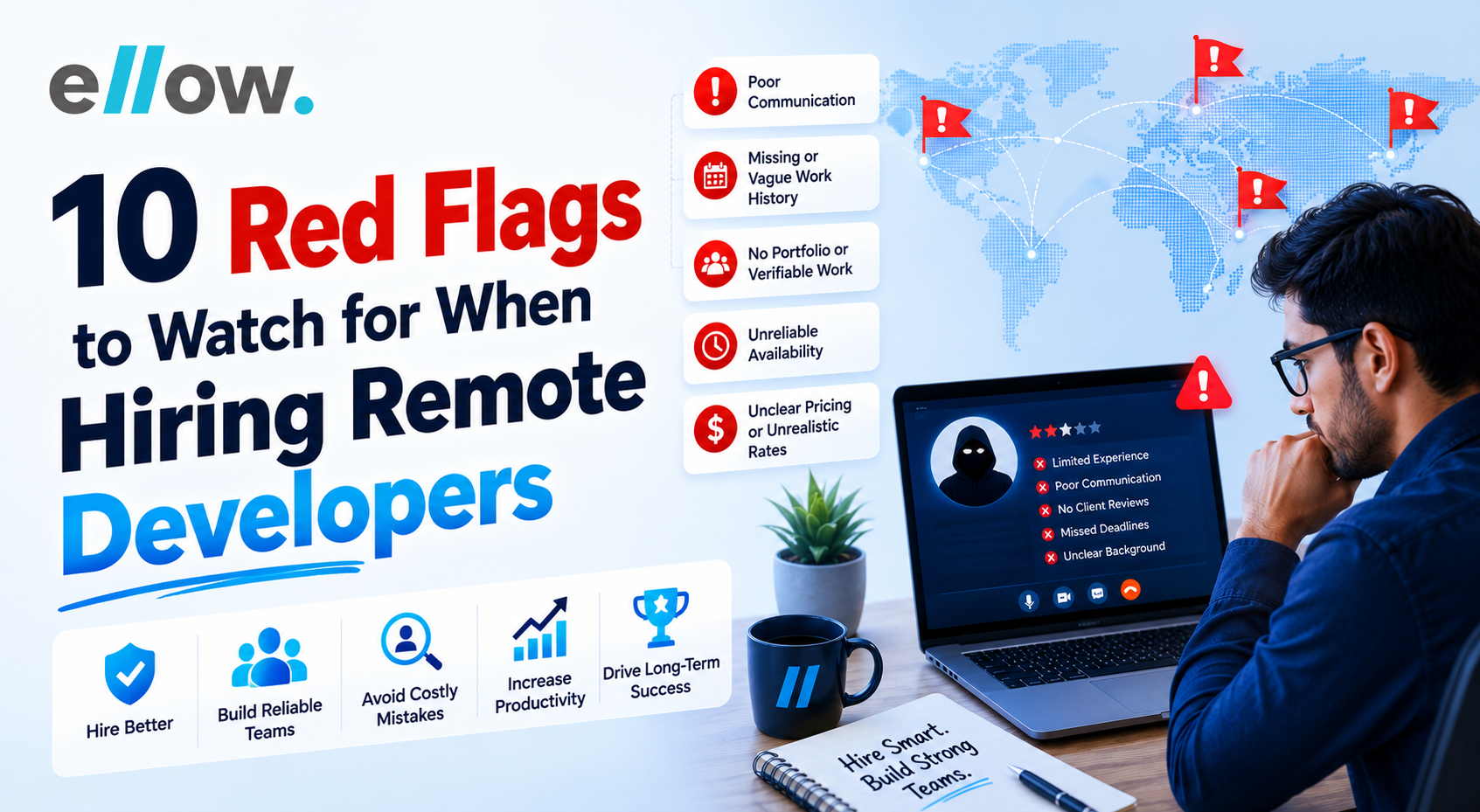
The demand for remote developers continues to grow as businesses embrace distributed teams and global talent acquisition. Remote hiring offers access to highly skilled professionals worldwide, allowing companies to scale quickly and efficiently. However, hiring the wrong developer can lead to missed deadlines, poor code quality, communication breakdowns, and costly project delays.
While many organizations focus on technical skills during recruitment, successful remote hiring requires evaluating much more than coding ability. Identifying warning signs early can help businesses avoid expensive mistakes and build stronger development teams.
If you’re planning to hire remote developers, understanding these common red flags can significantly improve your hiring decisions and project outcomes.
Why Remote Hiring Requires Extra Attention
Unlike traditional office environments, remote teams rely heavily on communication, accountability, and self-management. Since managers cannot directly observe daily work habits, hiring the right individuals becomes even more critical.
A strong remote developer should possess:
- Technical expertise
- Communication skills
- Problem-solving ability
- Accountability
- Time management
- Team collaboration skills
Missing any of these qualities can create challenges for distributed teams.
Red Flag #1: Poor Communication Skills
Communication is one of the most important factors in remote work success.
Warning signs include:
- Delayed responses
- Unclear answers
- Difficulty explaining technical concepts
- Lack of engagement during interviews
Remote developers frequently collaborate through written communication, video calls, and project management tools. If a candidate struggles to communicate during the hiring process, those issues often become more noticeable after onboarding.
According to research from, communication and collaboration skills remain among the most valuable traits employers seek in remote professionals.
Red Flag #2: Inability to Explain Past Projects
Experienced developers should be able to discuss their previous work confidently.
Be cautious if candidates:
- Provide vague project descriptions
- Avoid discussing technical decisions
- Cannot explain challenges they faced
- Take credit for unclear contributions
Strong developers can clearly articulate:
- Their role in projects
- Technologies used
- Problems solved
- Lessons learned
A detailed discussion often reveals the depth of their experience.
Red Flag #3: No Evidence of Practical Work
Resumes can look impressive, but practical evidence matters more.
Look for:
- GitHub repositories
- Portfolio projects
- Open-source contributions
- Case studies
- Technical blogs
Candidates who cannot demonstrate real-world work may require additional verification.
While not every excellent developer maintains a public portfolio, the absence of any practical examples should encourage further assessment.
Red Flag #4: Overemphasis on Tools Instead of Problem Solving
Technology stacks change frequently.
The best developers focus on:
- Solving business problems
- Understanding system architecture
- Writing maintainable code
- Learning new technologies quickly
Candidates who only discuss tools and frameworks without addressing problem-solving approaches may lack broader engineering thinking.
Effective developers understand why technologies are used, not just how to use them.
Red Flag #5: Lack of Accountability
Remote teams require individuals who can take ownership of their work.
Warning signs include:
- Blaming previous employers
- Avoiding responsibility for mistakes
- Making excuses for missed deadlines
- Difficulty discussing project failures
Every developer encounters challenges. Strong candidates demonstrate accountability and explain how they learned from difficult situations.
Ownership is often one of the strongest predictors of remote work success.
Red Flag #6: Weak Time Management Skills
Remote work demands excellent self-discipline.
Potential concerns include:
- Missed interview schedules
- Late assignment submissions
- Inconsistent availability
- Poor organization
Developers who struggle to manage their time during recruitment may face similar challenges once hired.
Ask candidates how they:
- Plan their workday
- Prioritize tasks
- Manage deadlines
- Coordinate across time zones
Their answers often provide valuable insight into their work habits.
Red Flag #7: Resistance to Collaboration
Remote developers rarely work in isolation.
Most projects require collaboration with:
- Product managers
- Designers
- QA teams
- DevOps engineers
- Stakeholders
Candidates who appear dismissive of teamwork may create friction within distributed teams.
Look for examples of:
- Cross-functional collaboration
- Mentoring others
- Participating in code reviews
- Sharing knowledge
Successful remote teams thrive on cooperation.
Red Flag #8: Inconsistent Technical Assessment Results
Technical interviews and coding assessments should align with the candidate’s claimed experience.
Potential warning signs include:
- Strong resumes but poor coding performance
- Difficulty solving basic problems
- Inability to explain solutions
- Significant discrepancies between experience and skill level
Structured technical evaluations help identify these inconsistencies before hiring decisions are made.
Always validate skills through practical assessments rather than relying solely on resumes.
Red Flag #9: Limited Interest in Continuous Learning
Technology evolves rapidly.
Strong developers continuously improve their skills through:
- Online courses
- Certifications
- Technical communities
- Industry events
- Personal projects
Candidates who show little interest in learning may struggle to adapt to changing technologies and business requirements.
Ask questions about:
- Recent technologies learned
- Industry trends
- Professional development efforts
Curiosity often indicates long-term growth potential.
Red Flag #10: Unrealistic Availability or Expectations
Be cautious when candidates:
- Promise 24/7 availability
- Claim expertise in every technology
- Accept unrealistic deadlines without discussion
- Overcommit to multiple projects
Experienced developers understand the importance of setting realistic expectations.
Healthy boundaries and honest communication typically indicate greater professionalism than exaggerated promises.
Additional Warning Signs to Consider
While the ten red flags above are among the most common, other concerns may include:
Frequent Job Hopping
Frequent role changes are not always negative, but patterns of very short employment periods may warrant additional questions.
Lack of Remote Work Experience
Remote work requires specific skills.
Candidates with limited remote experience may need additional onboarding and support.
Poor Documentation Habits
Documentation is critical in distributed teams.
Developers who dislike documenting processes, decisions, and code may create future challenges.
How to Reduce Hiring Risks
To minimize hiring mistakes, organizations should implement a structured evaluation process.
Use Technical Assessments
Practical coding exercises help validate skills objectively.
Conduct Multiple Interviews
Include:
- Technical interviews
- Behavioral interviews
- Team discussions
This provides a more complete picture of the candidate.
Check References
Speaking with previous managers or colleagues can reveal valuable insights about performance and reliability.
Start With Trial Projects
Small paid projects can help evaluate:
- Communication
- Code quality
- Collaboration
- Delivery consistency
before making long-term commitments.
Building a Strong Remote Development Team
Hiring the right developers is only part of the equation.
Organizations should also create an environment that supports remote success through:
- Clear communication processes
- Well-defined expectations
- Strong documentation
- Regular feedback
- Collaborative culture
Developers perform best when they have the tools, resources, and support needed to succeed.
Remote hiring provides access to exceptional global talent, but it also requires a thoughtful evaluation process. By identifying red flags early, companies can avoid costly mistakes and build stronger engineering teams.
Poor communication, lack of accountability, weak collaboration skills, and inconsistent technical performance are among the most common warning signs during recruitment. Paying close attention to these factors helps organizations make better hiring decisions and improve long-term team performance.
As remote work continues to shape the future of technology hiring, businesses that adopt a structured and thorough hiring process will be better positioned to attract, evaluate, and retain top development talent.