


Let’s buildthe future together.
Great ideas need great people. Partner with us to bring your vision to life, or take the first step in your career by joining our team of innovators.

Receive new articles delivered Straight to your inbox
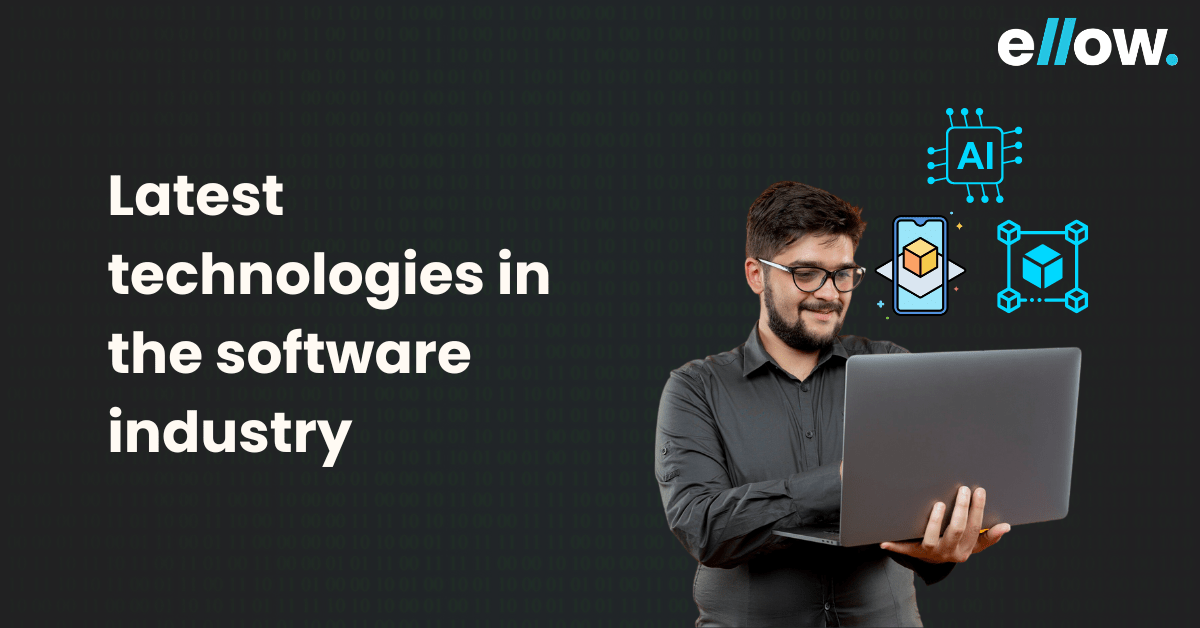
In the software industry, staying abreast of the latest technologies is crucial for professionals seeking to thrive in this ever-evolving field. According to data from Statista, global software revenue continues to soar, reflecting the industry’s robust growth and innovation.
Technology today is advancing rapidly, facilitating quicker progress and ushering in a new era of change. As we navigate towards a contactless future, IT professionals realize the need to adapt and evolve continuously.
In 2024, the role of an IT professional demands perpetual learning, unlearning, and relearning. For those aspiring to secure the highest-paying jobs in India’s tech sector, staying ahead of emerging technology trends is paramount.
Keeping an eye on the horizon and embracing emerging trends will ensure job security and open doors to lucrative opportunities. Here, we delve into the top 14 emerging technology trends of 2024, starting with the revolutionary concept of gen-AI.
Staying updated with trends not only helps you stay informed but also assists in adapting to evolving technologies and methodologies quickly. Here are the latest trends shaping software development:
Instead of relying on just our personal computers or local servers, more and more software developers are using the cloud for their projects. But what exactly is this “cloud”?
Think of the cloud as a huge virtual space where you can store and access your files, software, and applications over the internet. It’s like having a super powerful computer that you can use from anywhere, as long as you have an internet connection.
Cloud computing is rapidly growing in popularity, with businesses of all sizes adopting cloud-based solutions for their software needs.
Blockchain technology finds applications across various industries, leading to a rising demand for skilled professionals. Blockchain developers specialize in creating and implementing blockchain solutions, making it an attractive career option.
To excel in this field, proficiency in programming languages, databases, web development, and networking is essential. Mastering blockchain technology opens doors to roles like Risk Analyst, Tech Architect, and Front End Engineer, offering opportunities for growth and innovation across diverse industries.
Generative AI, an innovative technology, has transformed various industries by enabling machines to generate content resembling human-created work. It encompasses diverse applications, from generating text to synthesizing images and composing music. Mastering generative AI opens doors to exciting career opportunities in fields such as artificial intelligence research, data science, and creative industries. The expanding applications of generative AI promise a promising future for those skilled in this technology, shaping how we interact and create content in the digital era.
Key Considerations:
The surge in low-code/no-code development platforms has democratized software development, allowing individuals with limited coding knowledge to create custom applications. These platforms offer intuitive interfaces and pre-built components, enabling rapid application development without extensive coding.
The Ascendancy of React, Go, Kotlin, JavaScript, Swift, and TypeScript
Popular programming languages like React, Go, Kotlin, JavaScript, Swift, and TypeScript are leading the way in software development. The ascendancy of these languages and frameworks reflects their effectiveness in addressing modern software development challenges, empowering developers to build efficient, scalable, and maintainable applications across various platforms and domains.
Cybersecurity has become a concern in software development, with the increasing frequency and sophistication of cyber threats. As more aspects of our lives become digitized, the need to protect sensitive data and systems from cyber attacks has never been greater. Emphasizing cybersecurity in software development is essential to safeguarding digital assets, maintaining user trust, and complying with regulatory requirements in an increasingly connected world.
Both AR and VR technologies hold tremendous potential for transforming various industries and creating new possibilities for interactive and immersive experiences in the digital realm.
Augmented Reality (AR) is a technology that overlays digital information or virtual objects onto the real world, enhancing the user’s perception of reality. It seamlessly integrates computer-generated images, sounds, or other sensory inputs with the user’s environment in real time.
Virtual Reality (VR) is a technology that immerses users in a simulated environment, completely replacing the real world with a digitally created one. Users typically experience VR through specialized headsets that track their head movements and display corresponding visuals, creating a sense of presence and immersion.
DevOps adoption is a transformative approach in software development that emphasizes collaboration, communication, and automation between development (Dev) and operations (Ops) teams. By breaking down silos and fostering a culture of shared responsibility, DevOps aims to streamline the entire software delivery pipeline, from development and testing to deployment and monitoring.
Key Considerations:
Progressive Web Apps (PWAs) have emerged as a significant trend in software development, offering a compelling alternative to traditional mobile and web applications. These apps combine the best features of both web and mobile applications, delivering a seamless user experience across various devices and platforms.
Unlike native apps, PWAs are built using web technologies like HTML, CSS, and JavaScript but offer native-like capabilities such as offline access, push notifications, and installation to the home screen. As a result, PWAs provide businesses with a cost-effective solution for reaching a broader audience and improving user engagement without the need for separate development efforts for different platforms.
Overall, PWAs are changing how we use the web, offering a more app-like experience while still being accessible through a browser.
Native app development is experiencing a resurgence in popularity as businesses recognize the advantages of building applications tailored specifically for individual platforms. Unlike hybrid or web apps, native apps are developed using platform-specific languages and tools, such as Java or Kotlin for Android and Swift for iOS.
This approach allows developers to leverage the full capabilities of each platform, resulting in faster performance, better user experiences, and seamless integration with device features like GPS, camera, and push notifications. Many companies are deciding to make apps that work best on either iPhones or Android phones.
Big Data and Data Analytics have emerged as pivotal components in modern software development, reshaping how organizations extract insights from vast amounts of data. Big Data refers to the massive volume of structured and unstructured data generated by various sources, including social media, sensors, and transactions.
Data Analytics, on the other hand, involves analyzing this data to uncover patterns, trends, and correlations that can inform decision-making and drive business strategies. This integration of Big Data and Data Analytics empowers organizations to gain valuable insights into customer behavior, market trends, and operational efficiencies, ultimately leading to improved performance and competitive advantage.
The Internet of Things (IoT) has emerged as a transformative technology, connecting everyday objects and devices to the internet. This connectivity enables these devices to collect, exchange, and analyze data, leading to intelligent decision-making and automation.
IoT applications span various industries, from healthcare and manufacturing to agriculture and smart cities, addressing diverse challenges and enhancing operational efficiency. As the number of IoT devices continues to proliferate, the demand for software solutions to manage and harness the generated data grows exponentially.
5G technology represents the next generation of wireless communication, promising significantly faster speeds, lower latency, and greater capacity compared to its predecessors. With its revolutionary capabilities, 5G is poised to transform various industries, including telecommunications, healthcare, transportation, and entertainment.
This advanced network infrastructure opens up new possibilities for innovation, enabling seamless connectivity and powering emerging technologies such as augmented reality, virtual reality, and the Internet of Things.
Key Considerations
Robotic Process Automation (RPA) is an advanced technology that automates repetitive tasks and processes traditionally performed by humans. It utilizes software robots or bots to emulate human interactions with digital systems, such as entering data, performing calculations, or triggering responses.
RPA streamlines workflows increases efficiency, and reduces human error by automating mundane and rule-based tasks. This transformative technology has applications across various industries, including finance, healthcare, manufacturing, and customer service, where it can optimize operations and free up human resources for more complex and strategic activities.
Key Considerations:
Before integrating the latest software technology, ensure it aligns with your company’s objectives. Assess how these innovations can contribute to your goals, such as improving user experience or enhancing operational efficiency. By aligning technology with business objectives, you can make strategic decisions that lead to meaningful outcomes.
Prioritize cybersecurity and data management when adopting new software technology. Implement robust security measures to protect your systems and sensitive data from cyber threats. Utilize solutions like cloud computing and encryption to safeguard information. Staying updated on security trends and leveraging technologies like automation can further enhance your defense against potential breaches.
Invest in the continual growth of your team’s skills to keep pace with technological advancements. Provide training opportunities on emerging programming languages, development methodologies, and innovative tools. Offering courses on topics like machine learning or cloud computing can equip your team with the expertise needed to effectively implement new technologies and drive innovation within your organization.
Consider the scalability and flexibility of new software technologies to ensure they can accommodate growth and adapt to changing requirements. Build solutions that can scale seamlessly with increasing demands, such as accommodating a growing user base or expanding functionality. Flexibility is key to future-proofing your software and remaining agile in a competitive landscape.
Evaluate the potential return on investment before implementing new software technology. While staying ahead technologically is important, it’s equally crucial to assess the cost-effectiveness and potential benefits. Calculate the expected returns against the investment required, considering factors like developer salaries and infrastructure costs. Utilize tools like predictive analytics to measure the impact on business performance and make informed decisions about technology investments.
Keeping abreast of the newest software technologies is essential for businesses and development teams alike. This ongoing pursuit ensures a competitive edge in our rapidly evolving industry landscape.
Evaluating how these advancements complement our unique business needs is paramount. While the latest innovations offer transformative potential, their integration demands meticulous planning and rigorous testing to avoid costly pitfalls.
Skilled development teams play a pivotal role in this process, serving as the cornerstone of successful technology adoption. Their expertise enables them to navigate the complexities inherent in new tools and systems adeptly. For hiring developers, contact ellow.io.
New Technology trends in recruitment to watch for in 2024
Emerging Trends in Educational Technology
Blockchain in Fintech: Reshaping the Financial Landscape
Generative AI vs. Predictive AI: What is the difference?
Ethics in Generative AI: Concerns, Examples, and Best Practices
Beyond Coding: Responsibility of developers using generative AI
Advantages and Disadvantages of Javascript
Top 7 Augmented Reality Frameworks for App Development
Top Skills To Look for In A DevOps Engineer
Top Benefits & Advantages of DevOps
Examples include artificial intelligence (AI) and machine learning (ML), blockchain, Internet of Things (IoT), cloud computing, and edge computing. Each of these technologies brings unique capabilities and opportunities for innovation.
Businesses can gain numerous benefits, such as increased efficiency, improved customer experiences, enhanced data security, scalability, and the ability to stay competitive in rapidly evolving markets.
Challenges may include compatibility issues with existing systems, cybersecurity concerns, data privacy regulations, skill gaps within the workforce, and the need for significant upfront investment in time and resources.
Successful integration requires comprehensive planning, thorough testing, clear communication among stakeholders, ongoing training for employees, and partnering with experienced development teams or consultants who specialize in the chosen technologies.
Businesses can stay updated by actively participating in industry events, conferences, and workshops, subscribing to relevant publications and newsletters, engaging with online communities and forums, and fostering a culture of continuous learning and innovation within their organizations.
How AI Reduces Time-to-Hire Without Compromising Quality
Top 5 Benefits of Working with an AI-Native Recruitment Agency as Business Owner

The Future of Hiring: AI Meets Human Expertise
Please feel free to share your thoughts and we can discuss it over a cup of tea.
Get a quote
Top 5 Benefits of Working with an AI-Native Recruitment Agency as Business Owner

Six Things to Consider When Hiring Remote Talent
ellow.io enters remote hires market with AI-based screening process
Great ideas need great people. Partner with us to bring your vision to life, or take the first step in your career by joining our team of innovators.

Looking to build your career in development? team@ellow.io